A Letter Sent Beyond Death
Two years after her fiancé Itsuki Fujii dies in a mountain accident, Hiroko Watanabe (Miho Nakayama) remains suspended inside a grief that has never found its ending. She discovers his childhood address in a school yearbook and, knowing the house no longer exists, sends a letter there as if posting it to heaven. It is a private gesture with no expectation of an answer. Then one arrives. The reply comes from Otaru, written by a woman who shares the dead man’s name—and, as Hiroko gradually discovers, once shared his classroom. What begins as an impossible correspondence slowly opens a hidden chamber in the past, where an adolescent affection has survived for years without ever being recognized by the person at its center.
"A letter meant for the dead becomes a mirror for the living."
Miho Nakayama: Two Women, One Face
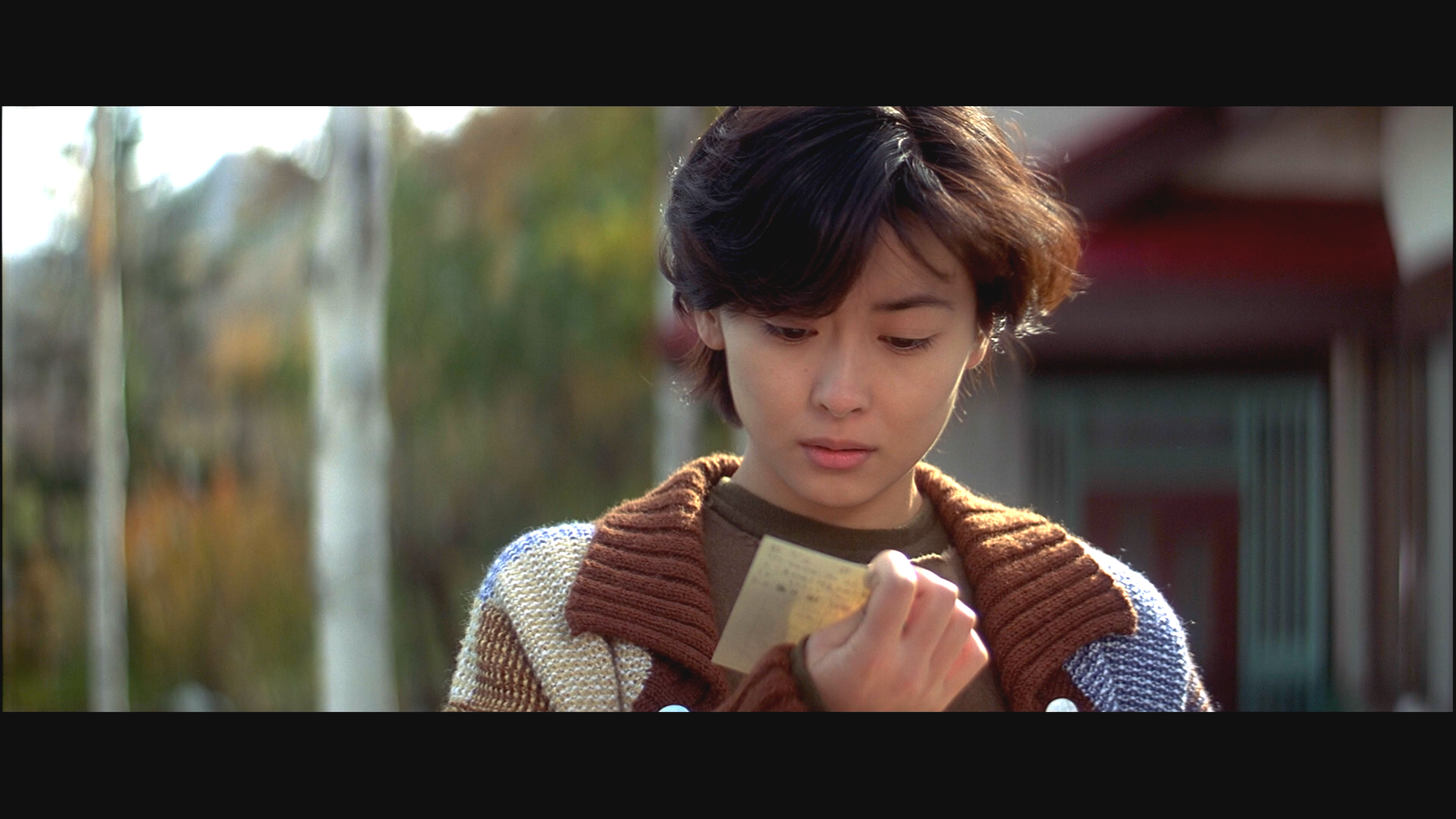
Miho Nakayama’s dual performance is the quiet miracle on which the entire film depends. As Hiroko, she carries grief like a habit learned by the body: her smiles arrive carefully, her movements seem slightly delayed, and even among other people she appears to be listening for someone who is no longer there. As the female Itsuki Fujii, Nakayama is quicker, sharper, and more grounded in the practical irritations of everyday life. She is not haunted in the same way, at least not at first; the past reaches her through curiosity before it becomes emotion.
Casting the same actress in both roles is more than a narrative trick. It gives physical form to the uncertainty inside Hiroko’s love. If she resembles the girl her fiancé once knew, was she loved entirely as herself, or partly as the return of an image he had never forgotten? Nakayama never turns that question into melodrama. Instead, she allows the two women to remain distinct while an invisible resemblance draws them toward the same absent man. One is trying to release him; the other is only beginning to understand what he once felt.
Miki Sakai and Takashi Kashiwabara: A Love That Never Learned to Speak
The flashbacks belong to Miki Sakai and Takashi Kashiwabara, who play the two Itsuki Fujiis as teenagers. Their scenes capture the peculiar intensity of first love before either person has the language—or courage—to call it love. The boy hides behind teasing, borrowed books, and a series of library cards bearing his name. The girl responds with irritation because irritation is safer than recognition. Almost nothing is confessed, yet every silence accumulates meaning.
Kashiwabara gives the young Itsuki an unforgettable stillness. He often seems to be standing just outside the scene, watching and waiting for a moment he cannot create for himself. Sakai, meanwhile, makes the girl’s obliviousness feel completely natural rather than conveniently written. She remembers the embarrassment and absurdity of sharing a name with a classmate, but not the affection concealed inside those memories. By the time the truth finally reaches her, youth has already become something that can only be read backward.
Etsushi Toyokawa: The Patience to Let Someone Go
As Shigeru Akiba, Etsushi Toyokawa gives the film a necessary emotional counterweight. Akiba loves Hiroko, but understands that he cannot compete with an idealized dead man by demanding to be chosen. His presence is warm, occasionally awkward, and remarkably patient. He does not rescue Hiroko from grief; he stays near her until she is capable of stepping out of it herself.
That distinction matters. In a lesser romance, Akiba might exist only as the obvious “living alternative” to Itsuki. Toyokawa instead plays him as a person with his own vulnerability, someone who knows that love cannot be built by erasing what came before. His restraint keeps the film from treating mourning as an obstacle that another relationship can simply remove.
"Some love stories are not discovered until everyone who could have explained them is gone."
Snow, Letters, and the Shape of Memory
Shunji Iwai and cinematographer Noboru Shinoda turn winter into more than a beautiful setting. Otaru’s snow-covered streets seem to preserve every footprint for a moment before burying it again. The whiteness resembles an unwritten page, but also a surface on which the past can briefly reappear. Doors, windows, curtains, and long corridors repeatedly frame the characters at a distance, as though memory itself were deciding how close they are allowed to come.
The letters create another kind of distance. They make confession possible precisely because the people writing are separated from one another. Hiroko can ask questions she could never ask her fiancé, while the female Itsuki can revisit details she had dismissed as meaningless. Remedios’ delicate score never dictates what to feel; it drifts through the film like recollection, sometimes clear and sometimes just beyond reach. Together, the images, music, and handwritten words give Love Letter its unmistakable texture: intimate without being intrusive, sentimental without losing restraint.
The Love Hidden Inside the Story
The screenplay unfolds like an emotional mystery. Each new letter supplies another fragment, but the mystery is not really how the correspondence began. It is how one life can contain several different versions of the same person. To Hiroko, Itsuki is a fiancé frozen at the moment of loss. To Akiba, he is a friend whose absence still shapes the present. To the female Itsuki, he begins as an annoying classmate and gradually becomes the author of a feeling she failed to see.
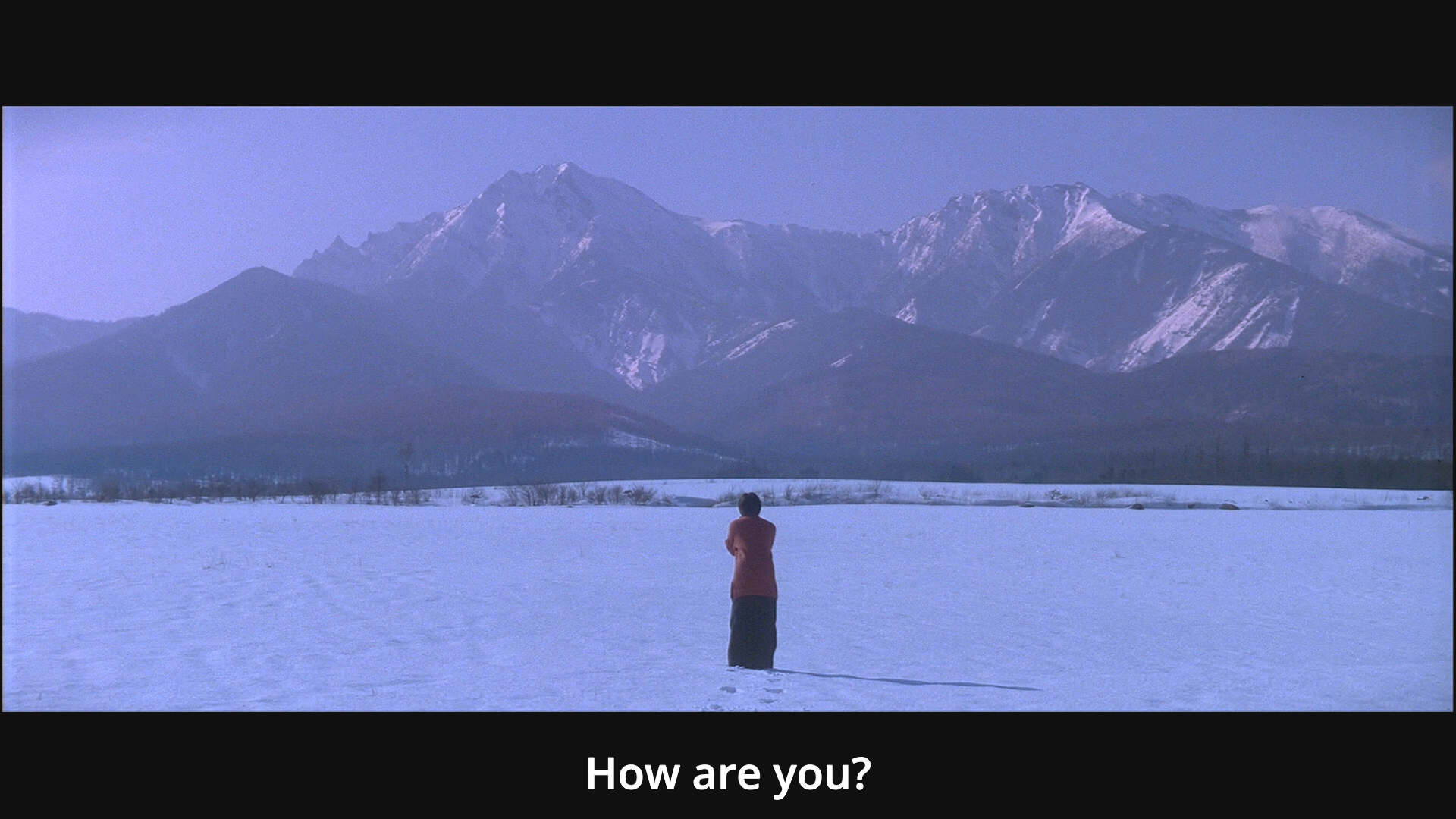
The final revelation in the library is devastating because it is so modest. There is no grand declaration waiting in the past, only an image quietly left behind on a checkout card. It transforms an ordinary school memory into the love letter of the title and reveals that the film’s deepest romance had always existed in the margins. Elsewhere, Hiroko’s call across the snow toward the mountain gives grief a voice at last. One woman discovers that she was loved; the other learns that she can survive having loved. Their stories meet not through possession, but through recognition.
Verdict
The Letter That Arrived Exactly on Time
10/10Love Letter is a romance built from absence, coincidence, and the fragile evidence people leave behind. Miho Nakayama gives two beautifully distinct performances, while Shunji Iwai transforms letters, snow, and half-remembered school days into a meditation on grief and belated understanding. Its emotions never need to announce themselves loudly. They wait, like a name on an old library card, until the right person finally knows how to read them.